What Is a Meme Coin and Why It Beats Fundamentals-Based Bets for Fast Gains
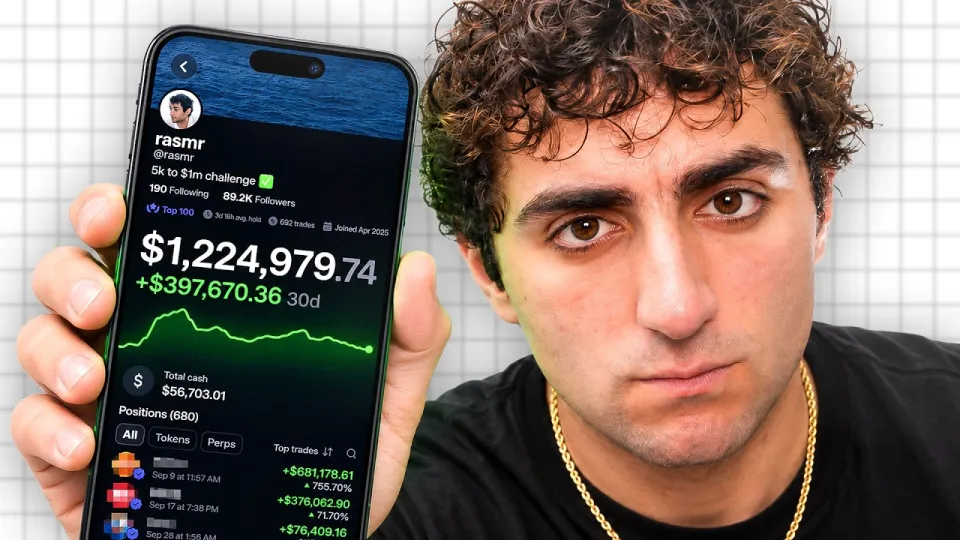
Video: 5 Years of Memecoin Knowledge in 12 Minutes
Want articles like this for your own video to promote it on YouTube and Google? Order them through the Telegram bot @sat_sit_bot. It writes articles around your video, embeds the video and publishes them on popular niche websites (no ads). Try it free: 50 articles on us.
· based on the channel rasmr
A meme coin is a cryptocurrency whose value rests on narrative, community attention and liquidity rather than on revenue, cash flow or a working product. For short-horizon trading it often beats fundamentals-based bets because the entire edge comes from timing entries and exits around attention, not from waiting for a business to mature. The practical takeaway is simple: treat memecoins as a timing game with a written exit plan, and start with capital you can afford to lose — the trading venue linked in the rasmr breakdown is FOMO.
Why a meme coin can outperform a fundamentals bet on a short horizon
A fundamentals-based token has to earn its valuation through adoption, revenue or network effects, and that takes quarters or years. A meme coin skips that queue: price discovery happens in hours, driven by who is talking about it, how much liquidity sits in the pool and how fast holders rotate. That structure creates two things a fundamentals trade rarely offers — a very short feedback loop and a very high variance. You find out within days, sometimes hours, whether your thesis was right. The trade-off is that the same speed works against you on the way down, which is why the exit plan matters more than the entry story. In the rasmr video the framing is consistent: the knowledge is about process, not about picking one magic ticker.
The four inputs that actually move memecoin prices
Narrative, liquidity, holder distribution and release mechanics are the four levers that decide whether a meme coin trends or rugs. Narrative is the story people repeat — a mascot, a cultural moment, an inside joke, an AI-agent angle. Liquidity is how much capital is needed to move price and how easily you can get out; thin pools produce vertical candles in both directions. Holder distribution tells you whether a handful of wallets can dump on you. Release mechanics — how much supply unlocks, when, and to whom — determine whether early buyers are exit liquidity or co-owners. Anyone asking what makes a coin rug usually gets the same answer: it is almost always a combination of the last three, with narrative used as bait.
A practical checklist before you buy
Work through the same short list every time so that the decision is mechanical rather than emotional. The sequence below reflects how experienced traders structure a memecoin entry.
- Identify the narrative and how old it is. A fresh story with rising mentions is different from a two-week-old story where the first wave already sold.
- Check the market cap against comparable coins in the same narrative. If the token is already at the valuation of the category leader, your upside is someone else's exit.
- Look at who released the token. A known launcher, a public team or a visible community changes the risk profile compared with an anonymous deployer.
- Inspect holder concentration and liquidity depth. Large single wallets and shallow pools mean your stop is theoretical, not real.
- Map the unlock schedule and any vesting. Supply that hits the market in weeks is a countdown clock on your position.
- Write the exit before you enter: a target where you sell part, a level where you accept being wrong, and a rule for trailing the rest.
Where traders actually lose money on meme coins
The most common losses in this niche come from emotion, not from bad information. Traders describe the same three patterns over and over: chasing a green candle because the chart "looks like it will continue", holding a losing position while hoping for a bounce back to entry, and letting a 50–100% gain round-trip to zero because selling felt like admitting the party was over. A related trap is watching a large unrealized profit and refusing to take any of it off the table. The fix is boring and effective — pre-commit to scaling out, size positions so a total loss does not change your month, and separate the decision to hold from the decision to add.
Common questions traders ask about meme coins
Newer traders tend to ask the same things, and the answers are structural rather than secret. Whether a specific upcoming coin is a good investment depends less on the theme and more on launch terms, float and who is already positioned. Whether you should start with a large bankroll is usually answered the other way: small capital first, because the skill you are buying is repetition, not exposure. And the recurring question about insider circles has a simple read — early access to launch information exists, but for most participants the realistic edge is reacting faster and managing risk better, not joining a private group. Treat any claim of guaranteed early allocation as a red flag until proven otherwise.
How to size positions and manage risk in a high-variance market
Position sizing is the only risk control that survives contact with a volatile chart. A workable structure is to cap any single memecoin at a small fixed percentage of your trading capital, split entries into at least two parts so you are not fully exposed to one candle, and define in advance what percentage of a winning position you sell at the first target. Because memecoins can move 50% in minutes, stop-losses on thin liquidity often fill far from your level — assume slippage and size accordingly. Keep a record of every trade with the narrative, market cap at entry, exit reason and result; after a few dozen entries the pattern in your own data will tell you more than any timeline.
Useful links
- FOMO trading platform via rasmr — the venue referenced in the video description.
- Catalyst trading group on Discord — the community chat linked alongside the video.
The bottom line on meme coin trading
The meme coin market rewards preparation and punishes improvisation: narrative gets you in, liquidity and unlocks get you out, and emotion decides whether you keep the profit. The rasmr breakdown, published as a compact twelve-minute summary of five years of experience, is a useful starting point precisely because it focuses on process — timing, market cap awareness and exits — rather than on picking winners. Start small, write your exit before you enter, and use a platform you understand; the FOMO registration link from the video is where that process begins for many viewers.
Key takeaways
- A meme coin is a token whose price is driven by narrative, community and liquidity, not by cash flow or product revenue.
- Most memecoin profits come from being early to a narrative and selling into strength, not from holding to a round number.
- Emotional trading is the most cited loss driver: chasing green candles, averaging into losers and round-tripping 50–100% gains.
- Market cap thresholds, token release mechanics and who launched the coin are the core checklist before any entry.
- Small starting capital and a written exit plan beat conviction; the rasmr breakdown frames memecoins as a timing game, not an investment thesis.
Questions & answers
What actually makes a meme coin go up?
Attention plus liquidity. A narrative that people repeat draws buyers, and thin liquidity makes each buy move the price disproportionately. Holder distribution and unlock schedules then decide whether that move holds or gets sold into.
Is it better to hold a memecoin or take profits early?
For most traders, scaling out beats holding for a round number. Taking part of a 50–100% gain off the table removes the risk of a full round trip, while leaving a portion open keeps upside if the narrative keeps running.
How do I spot a coin likely to rug?
Check who deployed it, how concentrated the holder list is, how deep the liquidity pool is and when supply unlocks. A coin with a fresh narrative but a few dominant wallets and imminent unlocks is a high-risk setup regardless of how good the story sounds.
How much capital should a beginner use?
Start with an amount small enough that a total loss does not affect your finances or your judgment. The goal in the first months is repetition and record-keeping, not maximum exposure, because the skill you are building is exit discipline.
Source: 5 Years of Memecoin Knowledge in 12 Minutes · Markdown version